A good auction description isn't a sales pitch. It tells bidders exactly what they're bidding on.
The more you share upfront, the easier it is for bidders to research the item, trust the listing and bid with confidence. Clear listings also mean fewer questions before the sale and fewer surprises at pickup.
Start with the basics
Lead with what someone needs to identify the item. Depending on what you're selling, include:
- Brand or manufacturer
- Exact product name
- Model and model number
- Serial number or VIN
- Year, if you can verify it
- Size or dimensions
- Quantity
- Mileage or hours
- Included accessories or attachments
Add the factory specs
For equipment, vehicles, appliances, electronics and tools, include the factory details you can verify:
- Engine make, model and horsepower
- Fuel type, like gas, diesel, electric or propane
- Voltage and power requirements
- Capacity or operating width
- Drive or transmission type
- Weight
- Factory attachments
Photograph the ID or serial plate too. Exact details let bidders research the right version instead of guessing.
Describe the actual condition
Be specific. "Good condition" doesn't tell bidders much. This does:
Starts and runs. Mower deck engages. Seat has a tear on the left side. Hood has scratches from normal use. No other functions tested.
If something is damaged, missing, cracked, leaking, dented, worn or not working, say so. Give bidders the facts and let them decide what it's worth.
Choose an accurate condition label
Condition labels aren't required, but we highly encourage them. They give bidders a quick read before they dig into the details. The common labels are Factory Sealed, Appears New, Open Box, Damaged and Partial/Incomplete.
Pick the one that fits best. If you assign a label, the item must meet it. See Item conditions explained for what each label means.
A label doesn't replace a good description. If an Open Box item is missing its charger, say so. If a Damaged item has a cracked housing, show it.
Think of it this way: the condition gives bidders the quick answer, the description gives them the details and the photos show them the item.
Say only what you tested
Words like works, runs and operational promise a lot. Use them only for what you've verified.
If you plugged it in and it turned on, say "powers on." That's not the same as every function working. For vehicles and equipment, starts, runs and drives each mean something different.
Didn't test something? Say that too. Specific beats vague.
Spell out what's included
Bidders are told not to assume anything the listing doesn't state or show. So don't make them guess.
Selling equipment with three attachments? List all three.
Tool comes without a battery or charger? Say so.
Selling several things as one item? List everything in it.
This matters most when other things show up in the background of your photos.
Make photos and description work together
Each should back up the other. Mention damage and photograph it. Include the serial number and photograph the plate.
If your first photo is a stock image, make sure the rest show the actual item, because that's what bidders are buying. For anything that runs, a short video of it starting or operating answers a lot of questions.
For equipment, photograph:
- Full views from several angles
- Manufacturer and model plate
- Serial number
- Hour meter
- Engine
- Controls
- Tires or tracks
- Attachments
- Known damage
- Areas of visible wear
For more, see How to take better auction photos: tips from our team.
Add a retail price, if you can verify it
A verified retail price gives bidders context. Label which kind it is: original retail, current retail or comparable new retail when the exact model is discontinued.
Compare the right product. Don't use the price of a newer, larger or better-equipped model. Retail price is context. It doesn't decide what an item sells for at auction.
Don't hide the bad stuff
A dent doesn't disappear because it's not in the description. Neither does a cracked screen, hydraulic leak, rust spot or warning light.
Disclose what you know and photograph it clearly. Transparency makes a better auction for everyone.
A good description, start to finish
Here's a skid steer loader. Don't write this:
Bobcat S130 skid steer. About 6,000 hours. Runs good. Some dents.
Instead, include the following:
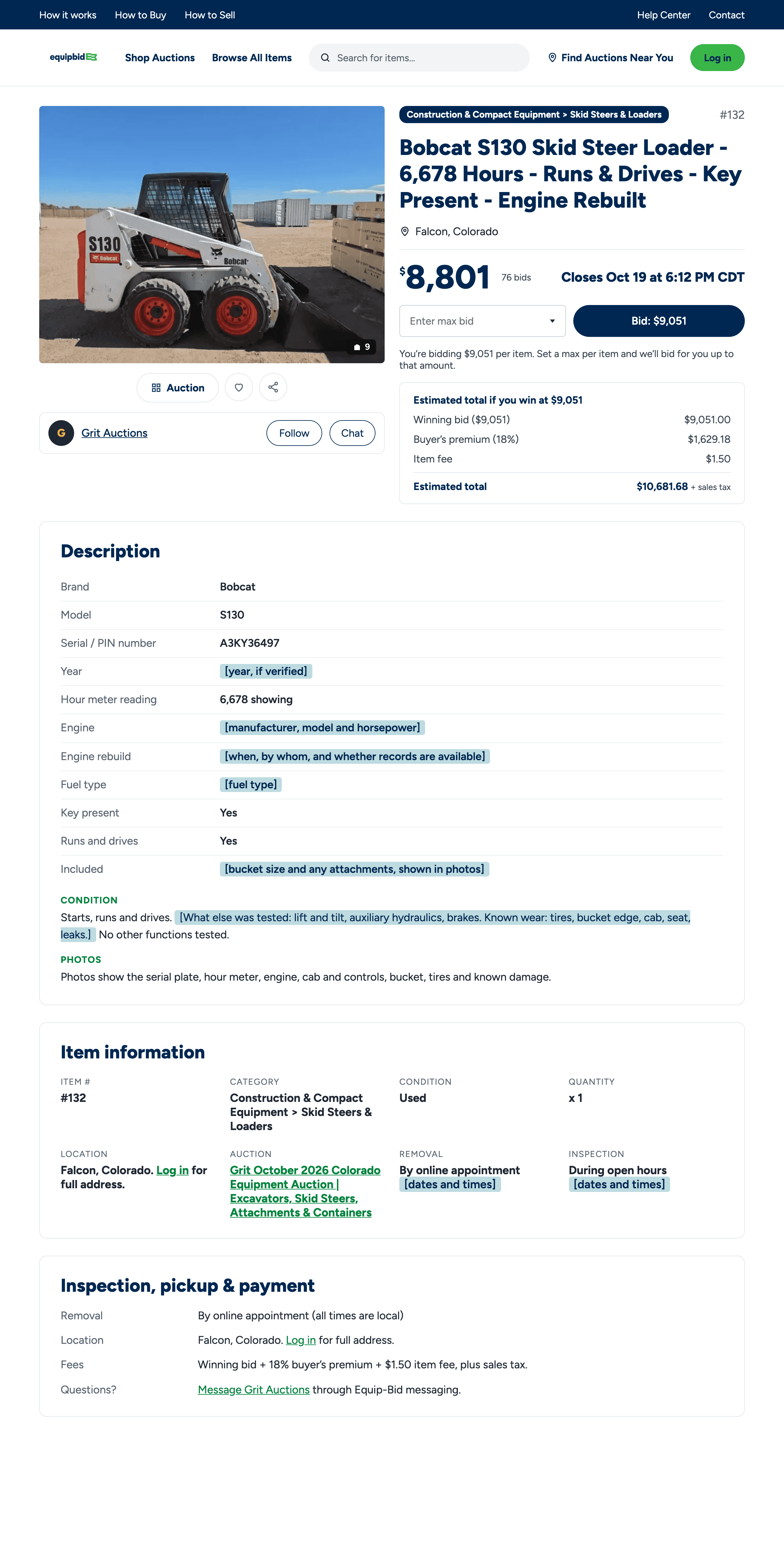
The placeholders are on purpose.
Never guess at a year, model number, serial number, engine, fuel type, horsepower or retail price. Get it from the machine and reliable product info.
Keep it simple
Skip the sales talk, like "Amazing opportunity!" and "Runs great!!!" Replace it with answers.
What is it? What's the exact model? What's included? What did you test? What's wrong with it?
Before you publish
Give the listing one more look:
- Exact item identified as fully as possible
- Model and serial numbers included
- Factory specs added
- Accurate condition label selected
- Included items listed
- Tested functions only
- Known damage, wear and missing parts disclosed
- Retail price verified, if you used one
- Photos that back up the description
Then ask one last question: if I'd never seen this item, would this listing tell me enough to research it and bid? If yes, you're ready.
Good descriptions don't oversell. They inform. Give bidders the facts, show them the condition and let the bidding begin.