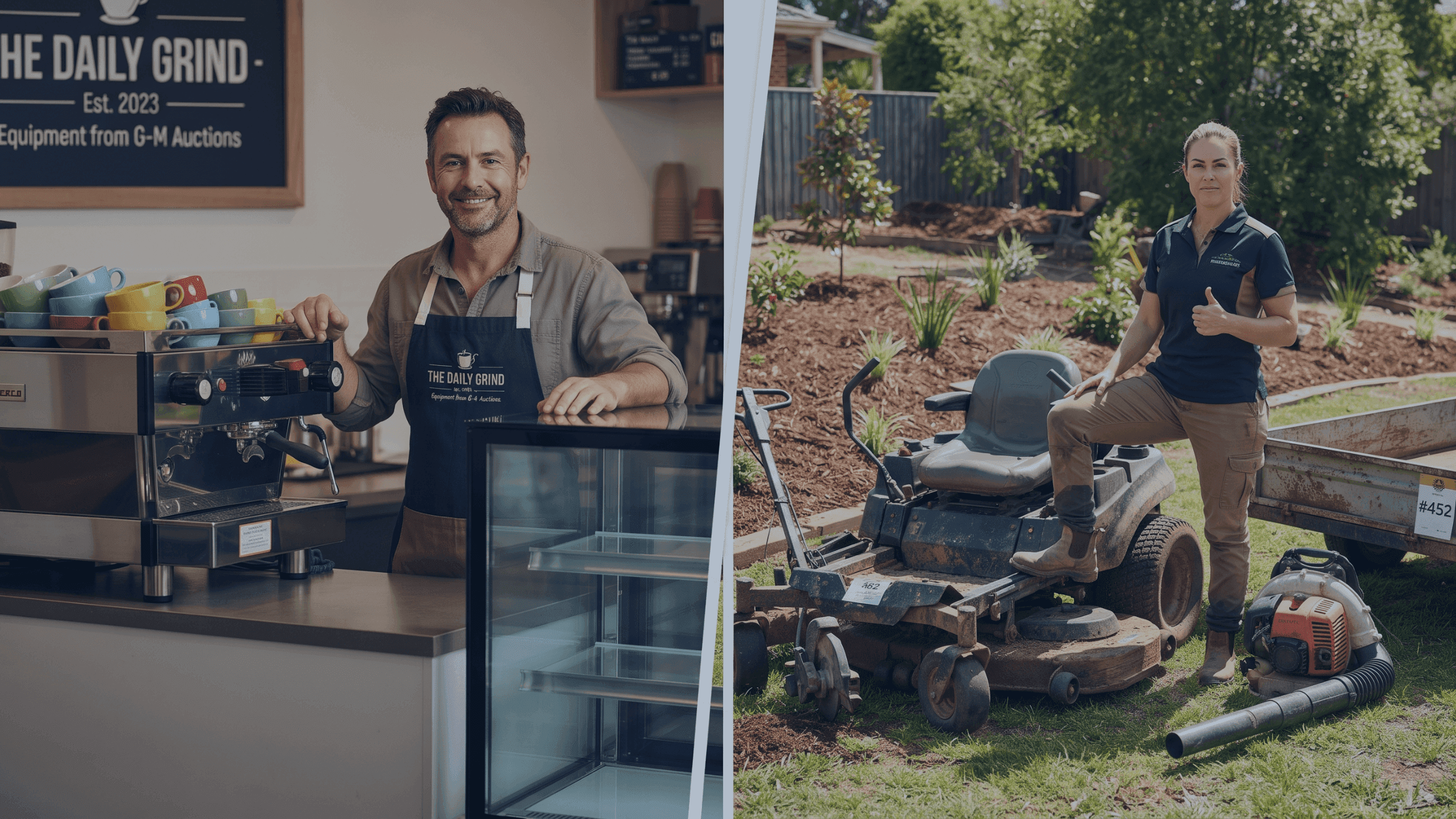
Running a small business means making a lot of decisions about where every dollar goes.
Equipment. Tools. Fixtures. Furniture. Inventory. Replacement parts. Expansion. Repairs.
The list adds up quickly.
That’s one reason small business owners shop online auctions.
Instead of relying only on traditional retail or dealer channels, auctions create another way to find the things a business needs, often across a much wider mix of merchandise.
That's a big part of why we built Equip-Bid. We connect people with opportunity by helping sellers move inventory and helping bidders find what they need, with clear pricing and no surprises.
Here’s why online auctions can make sense for small businesses.
Stretch the purchasing budget further
Small businesses rarely have unlimited budgets.
Every equipment purchase competes with payroll, marketing, rent, inventory and everything else it takes to keep the doors open.
That makes value important.
Online auctions can give business owners another place to look before paying full retail for something they need.
That doesn’t mean every auction purchase will be the cheapest option.
It means the bidding process can create opportunities to buy at a price that makes sense for your business.
The key is to compare the total cost, not just the current bid.
At Equip-Bid, that means accounting for the 18% buyer’s premium, $1.50 item fee, applicable sales tax, and any other auction-specific costs before deciding what an item is worth to you.
Tax-exempt businesses can upload their certificate before the auction closes so eligible items aren't taxed.
To learn more about tax exemption, read Sales tax and tax exemptions.
Find equipment without waiting on traditional channels
Businesses need all kinds of equipment.
Restaurant owners may need refrigeration or prep equipment.
Contractors may be looking for tools or machinery.
Warehouse operators may need shelving or material-handling equipment.
Farmers may be searching for machinery or attachments.
Office-based businesses may simply need desks, chairs or electronics.
Equip-Bid auctions cover both personal and commercial property, from desks and shelving to refrigeration and heavy equipment. New auctions open all the time, so small business owners have another place to look when they need something.
Buy fixtures and furniture for less than a full buildout
Opening or remodeling a business can get expensive fast.
Tables.
Chairs.
Shelving.
Display fixtures.
Office furniture.
Storage.
Commercial kitchen equipment.
These are the kinds of purchases that can quietly consume a big part of a startup or expansion budget.
Online auctions can be especially useful because businesses often sell fixtures and equipment when they close, remodel, relocate or replace assets.
One business may be done with a set of shelving.
Another may need exactly that shelving for a new location.
That’s the kind of connection auctions are built to create.
Add tools without rebuilding the budget
For contractors, mechanics, fabricators and other hands-on businesses, tools are not optional.
They’re part of the operation.
And replacing or expanding a tool inventory can get expensive.
Online auctions may include:
- Power tools
- Hand tools
- Tool storage
- Automotive tools
- Shop equipment
- Air compressors
- Construction tools
- Outdoor equipment
- Commercial machinery
The condition can vary, so business bidders should read the description, review every photo and understand whether an item is Factory Sealed, Appears New, Open Box, Damaged, or Partial/Incomplete before bidding.
Open Box items deserve a closer look. An Open Box item could be like new, or it could be incomplete, untested or not working. Its condition hasn't been verified either way, so use inspection when the auction offers it.
Know the condition.
Then decide whether the opportunity fits your business.
Source inventory for resale or business use
Not every small business owner is shopping for a machine.
Some are looking for merchandise.
Depending on the auction, online marketplaces may include retail returns, surplus merchandise, liquidation inventory and other products that businesses can evaluate for their own needs.
That might mean merchandise for resale.
It might mean supplies for the business.
It might simply mean finding products the company would otherwise purchase elsewhere.
The important part is understanding the specific auction terms, condition and total acquisition cost before bidding.
A low winning bid is only useful if the numbers still make sense when the item is in your hands.
Grow without buying everything brand new
New equipment has its advantages.
But a growing business does not always need brand-new everything.
Sometimes what matters is whether the asset can do the job.
A used desk can still be a desk.
A piece of shelving can still hold inventory.
A scratch on a refrigerator may not matter in a back-of-house commercial space.
A tool with cosmetic wear may still fit the operation perfectly.
That’s where intended use becomes important.
Ask:
What do we actually need this item to do?
If the condition fits the job, an auction purchase may let you direct more of your budget toward the parts of the business where new really matters.
Find specialized items you may not see at retail
One of the biggest advantages of auctions is variety.
Traditional retailers sell what they stock.
Auctions sell what sellers need to move.
That can bring some very specific commercial assets into the marketplace.
A closing restaurant might sell specialty kitchen equipment.
A contractor may liquidate machinery and attachments.
A manufacturer may sell shop or production assets.
An office may sell furniture and electronics.
A farm operation may move equipment it no longer needs.
For small businesses with specialized needs, that can create opportunities that are hard to find in a normal store.
Use auctions for expansion
Growing a business often requires a long shopping list.
A second location might need:
- Furniture
- Fixtures
- Tools
- Equipment
- Electronics
- Storage
- Appliances
- Vehicles
- Inventory
Buying all of that through traditional retail channels can put a lot of pressure on a growing company’s cash.
Auctions create another place to source those assets.
You may not find everything you need in one auction.
But you also don’t have to.
The marketplace changes constantly, which gives businesses a reason to keep watching for the right opportunities.
Replace something without overcomplicating it
Sometimes expansion isn’t the goal.
Something just broke.
If a business needs a replacement tool, appliance, piece of equipment or furniture, an online auction can be another place to look.
That can be especially useful when the exact age or cosmetic condition of an item matters less than whether it can fill the need.
The decision still deserves homework.
Compare the model.
Understand the condition.
Factor in transportation.
Consider repair or installation costs.
Then decide whether the total cost beats your alternatives.
Let the business case set your maximum bid
Business owners should approach auction bidding a little differently from casual shopping.
Before bidding, build the number.
Start with what comparable equipment or merchandise would cost elsewhere.
Then consider:
- Condition
- What’s included
- 18% buyer’s premium
- $1.50 item fee
- Applicable sales tax
- Transportation
- Installation
- Repairs or missing components
- How urgently you need the item
- How much value it will create for the business
Then set your maximum.
If another bidder goes higher?
Let them.
The goal isn’t to win every auction.
It’s to make purchases that make sense for the business.
Keep in mind that invoices over $2,000 can't be paid by card. Payment by wire transfer is standard, and cash or cashier's check only applies if the seller allows onsite payment
Make pickup part of the plan
Small business bidders are often purchasing larger or heavier items.
That makes pickup planning especially important.
Before bidding, check:
- Pickup location
- Removal schedule
- Appointment requirements
- Loading information
- Whether you need a truck or trailer
- Whether you need employees or additional help
- Any special removal instructions
Don’t wait until after you win to figure out how to move a commercial refrigerator, pallet of inventory or piece of equipment.
A good deal should still be a good deal when it reaches your business.
Auctions connect one business’s excess with another business’s need
This is where the auction model gets interesting.
One business has equipment it no longer needs.
Another is trying to grow.
One retailer has inventory to move.
Another business sees an opportunity.
One company remodels.
Another needs fixtures.
That connection is what Equip-Bid is all about. Our Deal Makers bring the inventory. Our Deal Seekers find the value. And both sides get deals done.
For small businesses, that connection can be practical.
The right asset moves from a company that no longer needs it to one that does.
Why small businesses keep watching the auctions
For a business owner, online auctions can offer a combination that traditional purchasing channels don’t always provide:
Variety.
Opportunity.
Changing inventory.
Competitive bidding.
Another way to stretch purchasing dollars.
Maybe you need one drill.
Maybe you need an entire restaurant kitchen.
Maybe you’re outfitting your first office.
Maybe you’re expanding into your third location.
Whatever stage your business is in, the basic strategy is the same.
Know what you need.
Understand what you’re bidding on.
Calculate the total cost.
Set your limit.
Then see what opportunities are waiting.